Food
Pa amb Tomàquet: How to Order Catalonia's Essential Bread
Understand pa amb tomàquet, the bread and tomato choices, typical accompaniments, fair menu expectations, and how to order without overcomplicating it.
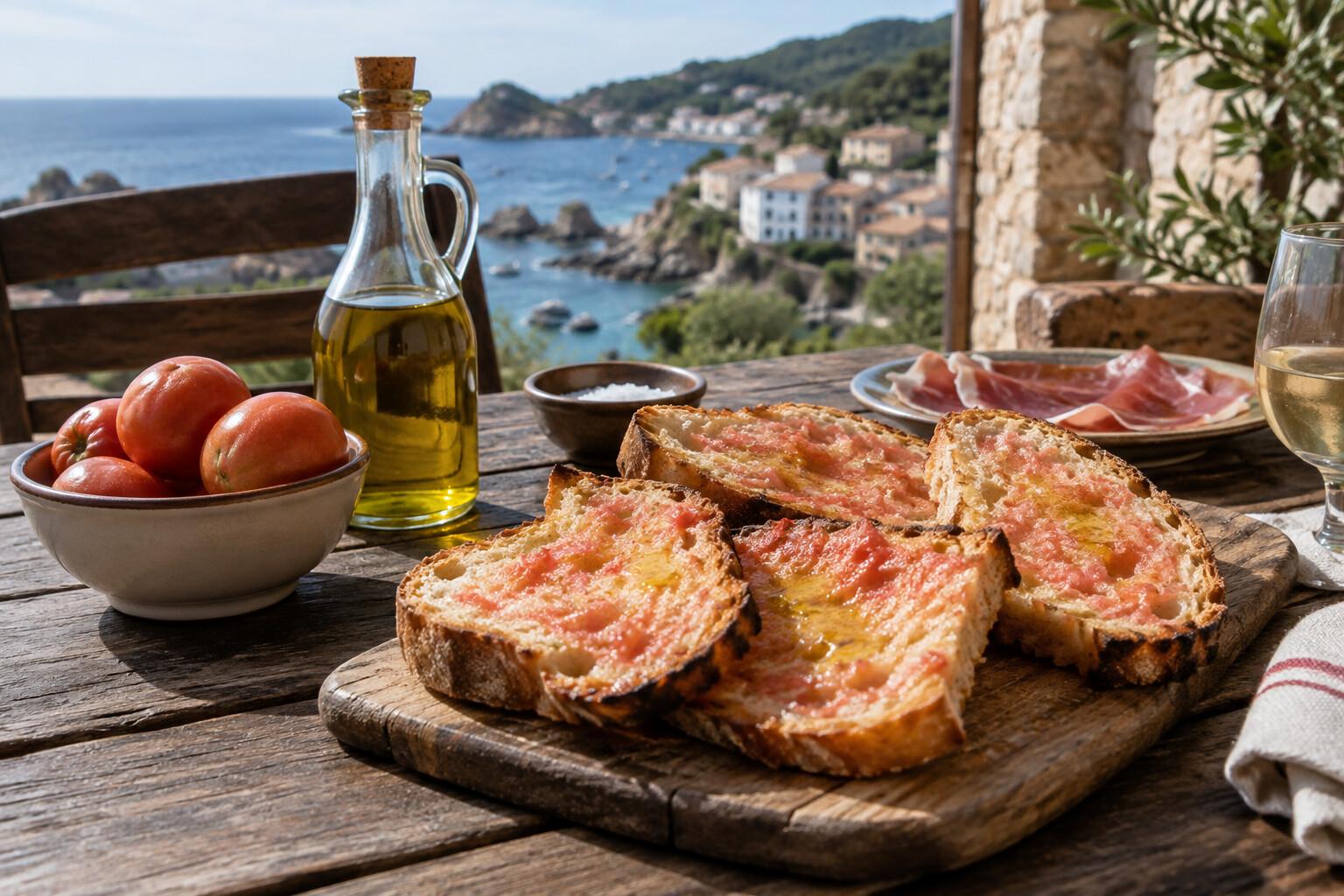
Pa amb tomàquet is not garlic bread with tomato sauce. It is bread rubbed with ripe tomato, seasoned with salt and olive oil, and served as the quiet structure of a Catalan table. Sometimes it arrives finished; sometimes the restaurant gives you bread, tomato, oil, and salt and expects you to make it.
The Catalan Tourist Board includes it among the emblematic preparations in its guide to Catalan dishes. That prominence does not make every version identical. Bread, toast, tomato ripeness, oil, and the order of rubbing all change the result.
Recognize the bread before judging the tomato
Pa de pagès is the classic country loaf: a substantial round with a firm crust and open crumb. A thick slice can absorb tomato and oil without collapsing. Bars may also use smaller toasted slices or narrow bread for sandwiches. Neither is automatically wrong, but a soft, sweet industrial slice produces a different dish.
If the bread arrives very crisp, rub gently so the crumb remains. If it is already dressed, eat it while the contrast between crust and moist surface still exists. Tomato bread left under a heap of hot food quickly becomes something else.
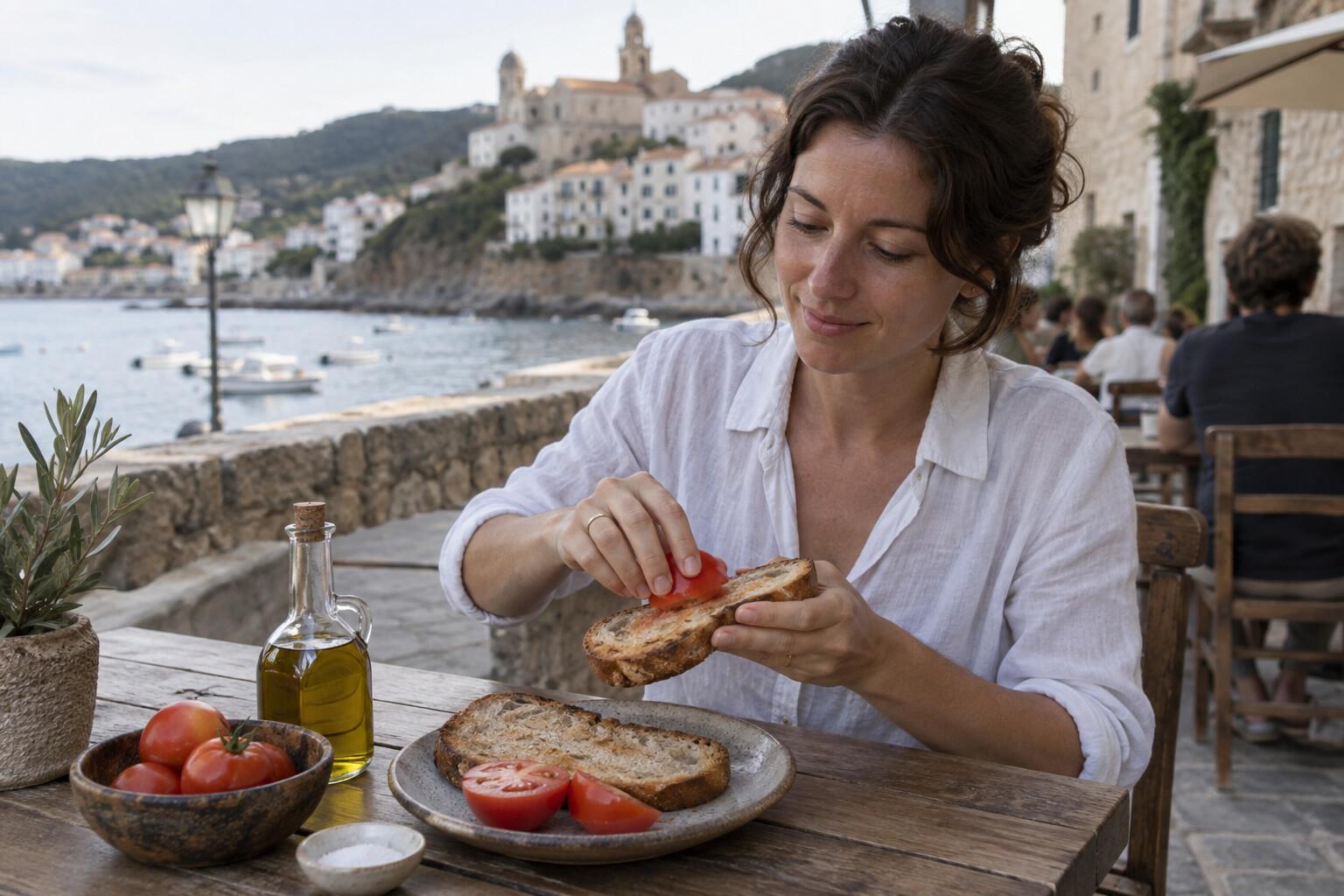
When the tomato comes to the table
Use the cut face of a very ripe tomato and press the pulp into the bread. The skin should end up almost empty in your fingers. Add a pinch of salt and a modest stream of oil. Garlic may be offered, especially with toast, but it is a choice rather than a universal ingredient.
The useful phrase is pa amb tomàquet, pronounced approximately “pahm too-MAH-ket.” In a Spanish-language interaction, pan con tomate will be understood. If you want it prepared rather than as components, ask whether it comes fet—already made.
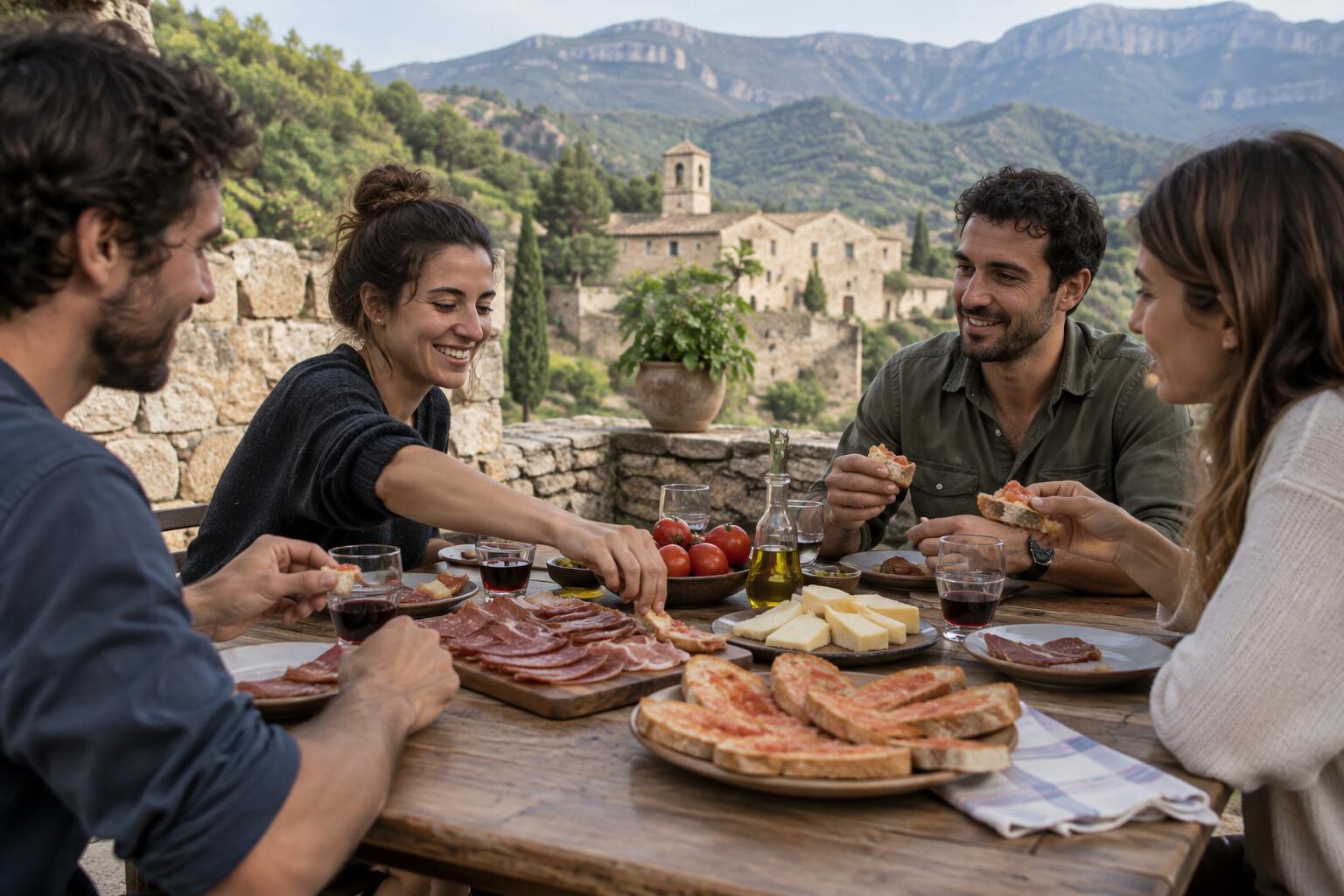
Pair it with one reason for ordering it
At breakfast, it may accompany coffee, a small sandwich, cheese, or cured meat. At lunch and dinner, it often turns plain bread service into the partner for fuet, ham, anchovies, grilled vegetables, or an omelet. A shared plate of bread does not need five more starters to justify it.
Compare Barcelona food walks only when the itinerary identifies real market or bar stops and states whether the tastings replace lunch.
Anchovies make a sharp coastal pairing; botifarra or grilled meat makes the bread part of a larger meal. With escalivada, it becomes a useful vehicle for roasted pepper and aubergine. Notice what the table needs before ordering a separate portion for every person.
Price depends on whether it is bread service or a dish
Use €2.50–6 as a broad planning range for a simple restaurant portion, with premium oil, elaborate toppings, or a high-rent dining room pushing it higher. Some menus price bread per person; others price a basket or serving. Ask once if the menu is unclear, particularly when untouched bread arrives automatically.
A topped toast can cost €6–14 and function as breakfast or a light meal. That is not the same product as a shared side of tomato bread. Compare portion and topping, not the name alone.
Good manners are mostly about the shared plate
Make only what you will eat when the ingredients are on the table. Do not handle other diners' slices, and use the oil without flooding the communal plate. If bread arrives prepared, pass the basket rather than selecting several pieces at once.
Gluten-free diners should not assume a restaurant can prevent cross-contact simply because it has packaged bread. Ask about preparation surface, toaster, and utensils. Tomato and oil are simple; the shared kitchen is the complicated part.
The dish is at its best when it stops being a performance. Choose sound bread, ripe tomato, enough oil, and something beside it that deserves the support. That is why pa amb tomàquet appears at breakfast, beside grilled food, and in the middle of long tables: it adapts without disappearing. The simplest way to order is to ask whether the bread is toasted to order and whether the tomato, oil, and salt are served separately. That small distinction tells you whether the dish is a quick breakfast, a shared accompaniment, or part of a longer meal; it also helps avoid ordering more bread than the table can finish.
Related guides
- Suquet de Peix: How to Order Catalonia's Fish Stew
Ask the right questions about fish, minimum portions and price before ordering suquet de peix in a Catalan coastal restaurant.
- Crema Catalana or Flan? How to Order the Better Dessert
Tell crema catalana from flan, ask whether it is made in-house and choose a good Catalan dessert without ordering by obligation.
- Escalivada Explained: Ordering Catalonia’s Roasted Vegetables
Learn what escalivada contains, how to order it, when toppings change the dish and what to expect from market counters and restaurant menus.
Are you in the know?
Receive new articles, local updates, and occasional offers from selected partners. We never share your email address. Unsubscribe at any time.
By subscribing you agree to our privacy policy.