Food
Crema Catalana or Flan? How to Order the Better Dessert
Tell crema catalana from flan, ask whether it is made in-house and choose a good Catalan dessert without ordering by obligation.
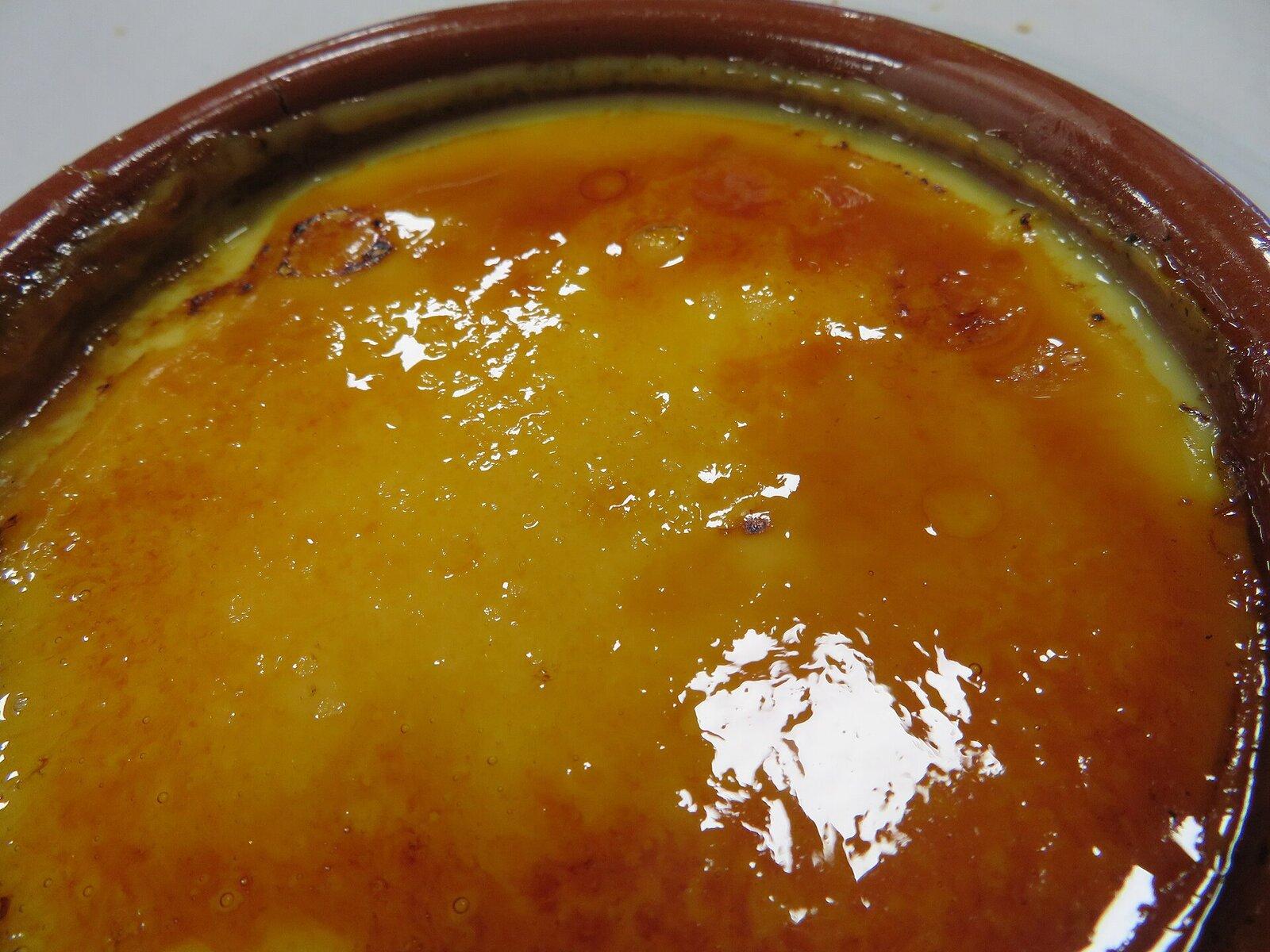
Crema catalana is the right order when you want cool aromatic custard beneath a thin crust that has been burnt shortly before service. It is the wrong order when a restaurant treats the name as sufficient and sends out a factory ramekin with a soft, hours-old sugar lid. Ask one quiet question—És feta a casa?, “Is it made here?”—before choosing it over a good house flan.
Neither dessert needs to defeat the other. They solve different cravings: crema catalana is broad, shallow and fragrant; flan is molded, softly set and surrounded by liquid caramel.
What should arrive in the crema catalana dish
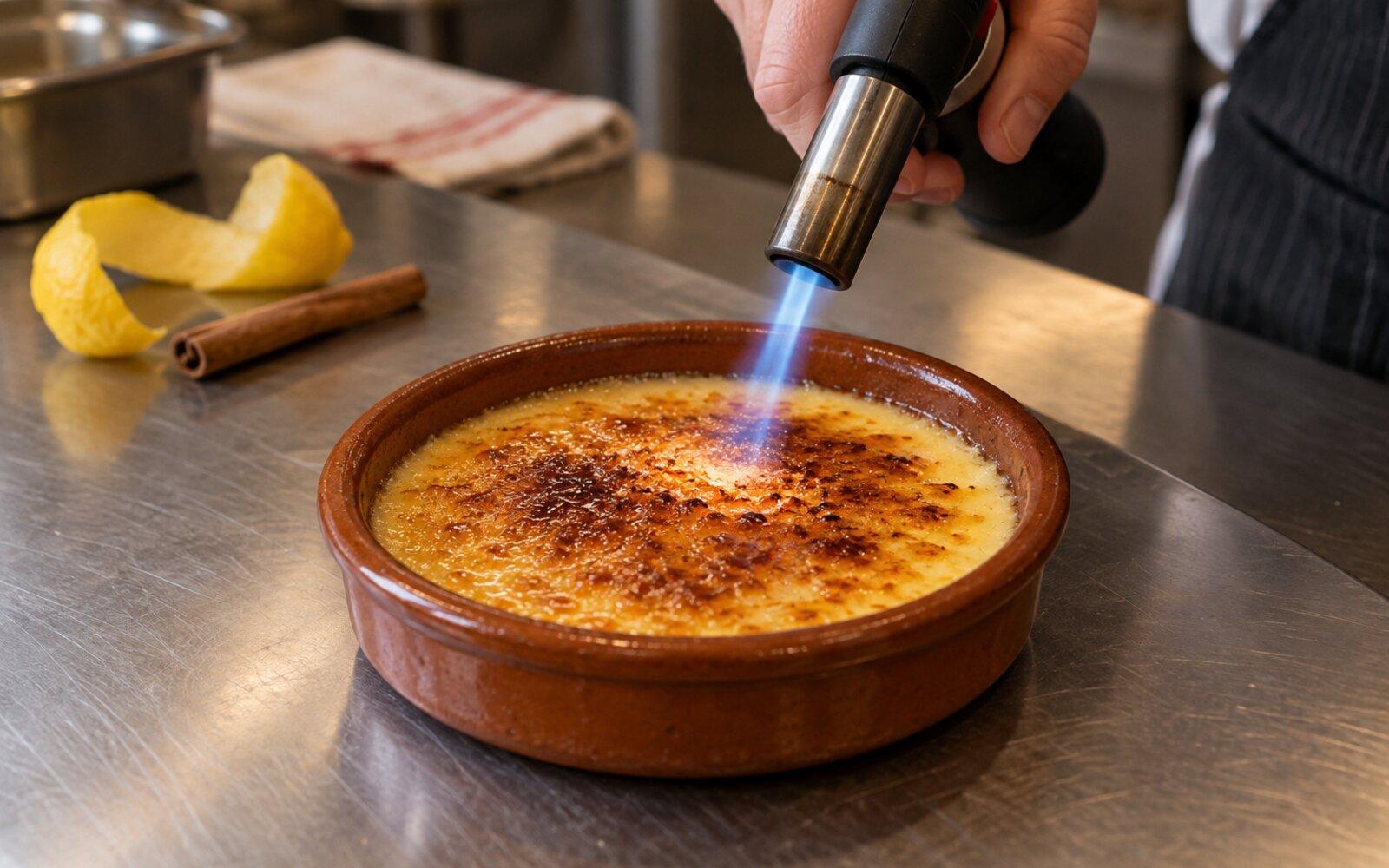
Traditional crema catalana begins with milk, egg yolks, sugar and starch, commonly scented with cinnamon and lemon peel. Barcelona Tourism's preparation outline cooks the custard on the stove, chills it in individual dishes and burns the sugar before serving. It is not simply a Spanish label for crème brûlée: the dairy, thickening method and cooking technique differ even when the finished surfaces look related.
The dish should be cool underneath. The caramelized top should crack under the spoon rather than bend like a sticky film. Cinnamon and citrus should read as perfume, not as grit or a decorative stick left in the bowl. Expect a shallow terracotta-style dish more often than a freestanding mold.
Crema's history is deeper than a tourist-menu category. Catalonia's heritage service notes its popularity from the sixteenth century in an overview of early-modern Catalan cooking. The association with Saint Joseph's Day on 19 March explains the name crema de Sant Josep, although restaurants now serve it throughout the year.
Flan moves; crema catalana yields
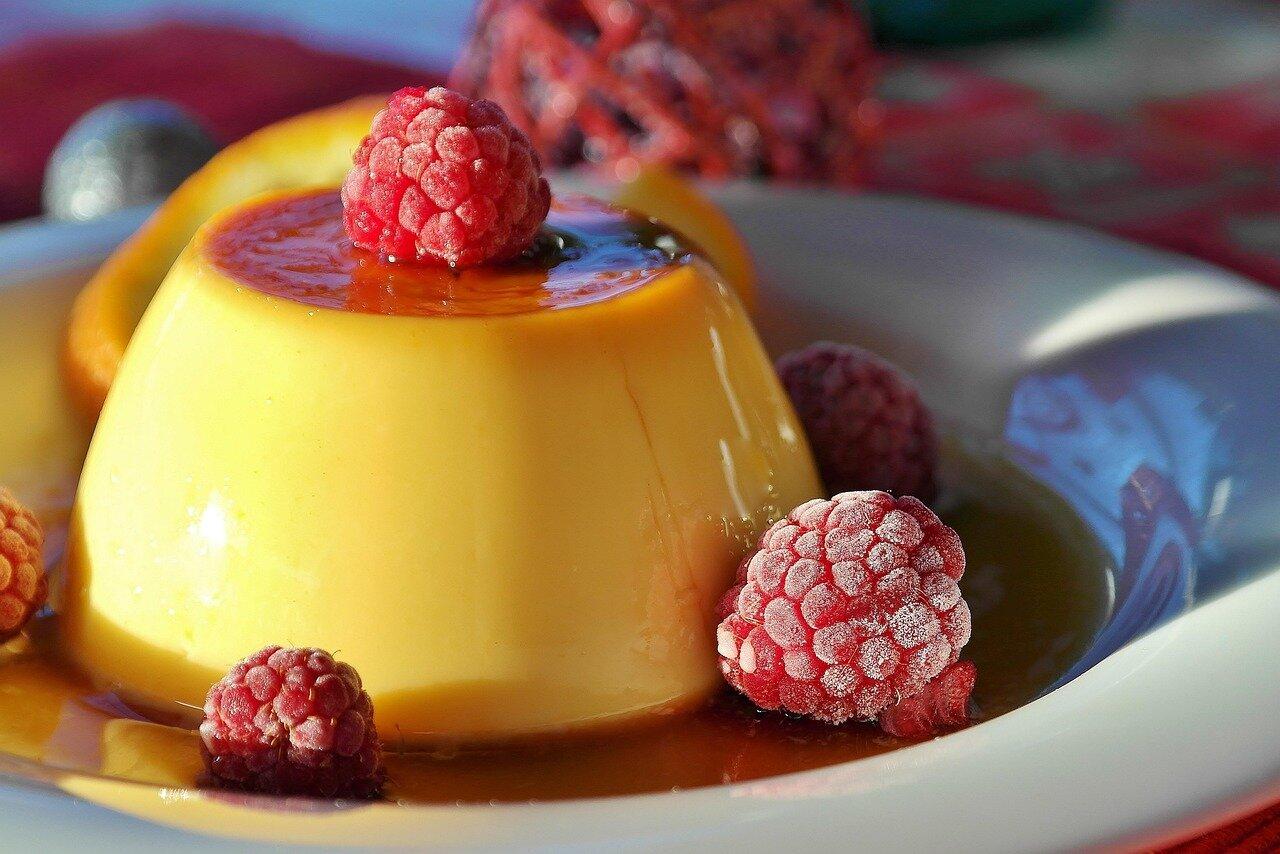
Flan is set in a mold with caramel and turned out for service. A good one trembles but holds its shape. The caramel becomes a sauce around it. Whole eggs are common, and the result tastes more directly of egg and caramel than of cinnamon and citrus.
Crema catalana stays in its serving dish. Starch helps thicken it; the spoon passes through a custard that does not need to stand upright. Its caramel belongs on top. That structural difference is more useful at the table than arguments about which recipe came first.
Crème brûlée is another relative, usually richer because cream and oven cooking in a water bath lead to a different set. Restaurants may blur all three, especially in translated menus. Do not interrogate the server about culinary genealogy. Ask what is made in the kitchen and choose the preparation the restaurant takes seriously.
Ask whether the sugar is burnt to order
Use one of these questions:
- La crema catalana és feta a casa? — Is the crema catalana house-made?
- La cremeu al moment? — Do you burn the sugar when it is ordered?
- Quines postres feu aquí? — Which desserts do you make here?
The third question often produces the best answer. A restaurant may buy crema but make an excellent flan, cheesecake or seasonal fruit dessert. House-made matters more than completing a Catalan-food checklist.
Allergy information deserves a direct question. Standard crema catalana contains milk and egg, and starch or kitchen handling may matter for gluten-sensitive diners. The Catalan government's current crema recipe illustrates the core milk, yolk, starch, cinnamon and citrus structure, but a restaurant's recipe can vary.
A fair price depends on the dining room
In an ordinary bar or neighborhood restaurant, allow roughly €4–7 when dessert is ordered separately. A polished central restaurant may charge €7–11, while a menú del dia often includes a smaller dessert within the fixed price. These are planning ranges, not regulated tariffs; inspect the current menu before sitting down.
An unusually cheap crema in a high-rent tourist corridor may be perfectly acceptable, but price alone does not show whether it was made there. Conversely, a high price does not guarantee that the sugar was freshly burnt. The short house-made question is more informative than the chalkboard typography.
At lunch, wait until the server lists the day's desserts. The printed English menu may omit a house preparation available in Catalan or Spanish. If crema catalana appears only in a laminated “traditional desserts” panel alongside photographs, lower expectations and ask what the kitchen actually makes.
Granjas and menu restaurants offer different pleasures
A traditional granja—a café associated with milk drinks, chocolate and sweets—can be a good place to encounter crema outside a full dinner. Service may be afternoon-oriented, and the dessert might arrive with coffee rather than after several courses. Check that the establishment serves it that day; being traditional does not obligate a café to keep every canonical sweet ready.
At a menu restaurant, crema makes most sense after a savory, uncomplicated lunch. The burnt sugar supplies bitterness after stew, grilled meat or fish. Sharing one dish is normal if you only want a taste, although the shallow serving makes division slightly messy.
When flan is the better order
Choose flan when the server says it is the dessert made that morning, when you prefer soft caramel to a brittle crust, or when crema's cinnamon and citrus do not appeal. Choose mel i mató when you want fresh cheese and honey rather than another custard. In summer, good fruit can be the more local decision than either famous sweet.
If the crema arrives with a dull, wet top, it has probably waited too long after burning. You need not send it back unless it is genuinely poor, but you have learned what the restaurant prioritizes. Break the crust, taste the custard and let the answer guide the next meal.
Crema catalana is worth seeking once; it is not a loyalty test. The most Catalan choice at the end of lunch is often the dessert the kitchen made well that day.
Related guides
- Suquet de Peix: How to Order Catalonia's Fish Stew
Ask the right questions about fish, minimum portions and price before ordering suquet de peix in a Catalan coastal restaurant.
- Escalivada Explained: Ordering Catalonia’s Roasted Vegetables
Learn what escalivada contains, how to order it, when toppings change the dish and what to expect from market counters and restaurant menus.
- Ebro Delta Rice Dishes: What to Order and Where
Understand dry, creamy and black rice in the Ebro Delta, with ordering phrases, portion rules, meal budgets and places to start.
Are you in the know?
Receive new articles, local updates, and occasional offers from selected partners. We never share your email address. Unsubscribe at any time.
By subscribing you agree to our privacy policy.