Food
Botifarra in Catalonia: What to Order and What Arrives
A practical guide to fresh and cooked botifarra, menu vocabulary, common pairings, market buying, portions, and typical meal costs.
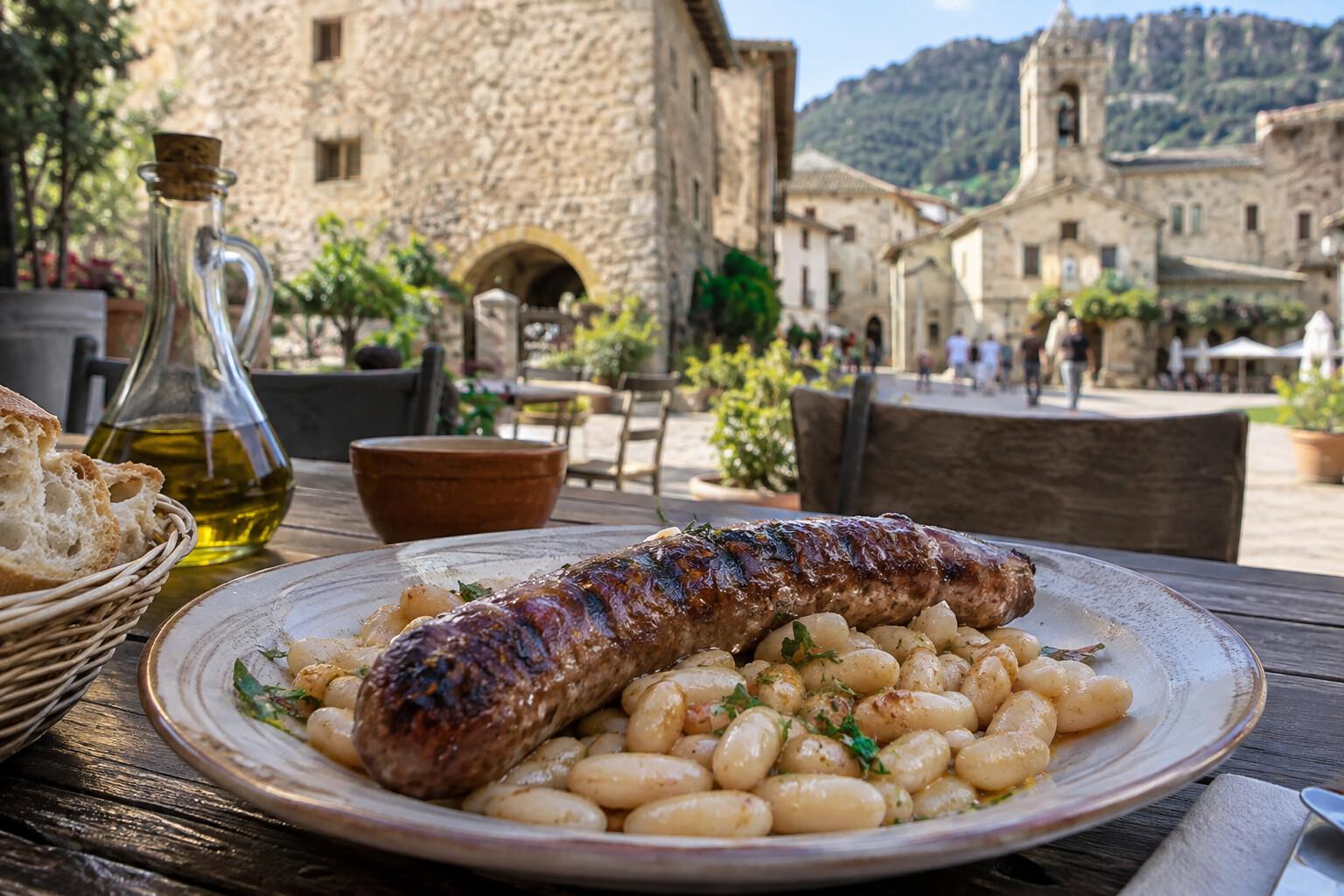
Ordering botifarra without the next word can produce either a grilled main course or a sliceable cooked sausage. The family name matters less than the form in front of you: fresh sausage is cooked through and eaten hot, while white, black, egg, and other cooked versions are usually sliced for a cold plate, sandwich, or starter.
The Catalan Tourist Board's traditional dishes overview places botifarra with beans among the recognizable Catalan combinations. Use that as an entry point, not as a claim that every restaurant serves the same recipe.
Botifarra amb mongetes is the clear first order
This plate pairs grilled fresh sausage with white beans, often sautéed with garlic or herbs. It is filling, direct, and particularly common in traditional restaurants. Ask whether the plate includes beans and garnish rather than ordering sides automatically.
Expect one substantial sausage as the protein. Mustard or a complex sauce is not the point; browning, seasoning, and the contrast with creamy beans are. Pa amb tomàquet is useful when sharing, but the combined main course may already be enough starch and food for one person.
Budget roughly €12–20 for the dish in an ordinary restaurant, with destination, portion, and menu format changing the price. A weekday menú del dia may include it among several mains and offer better value than ordering each course separately.
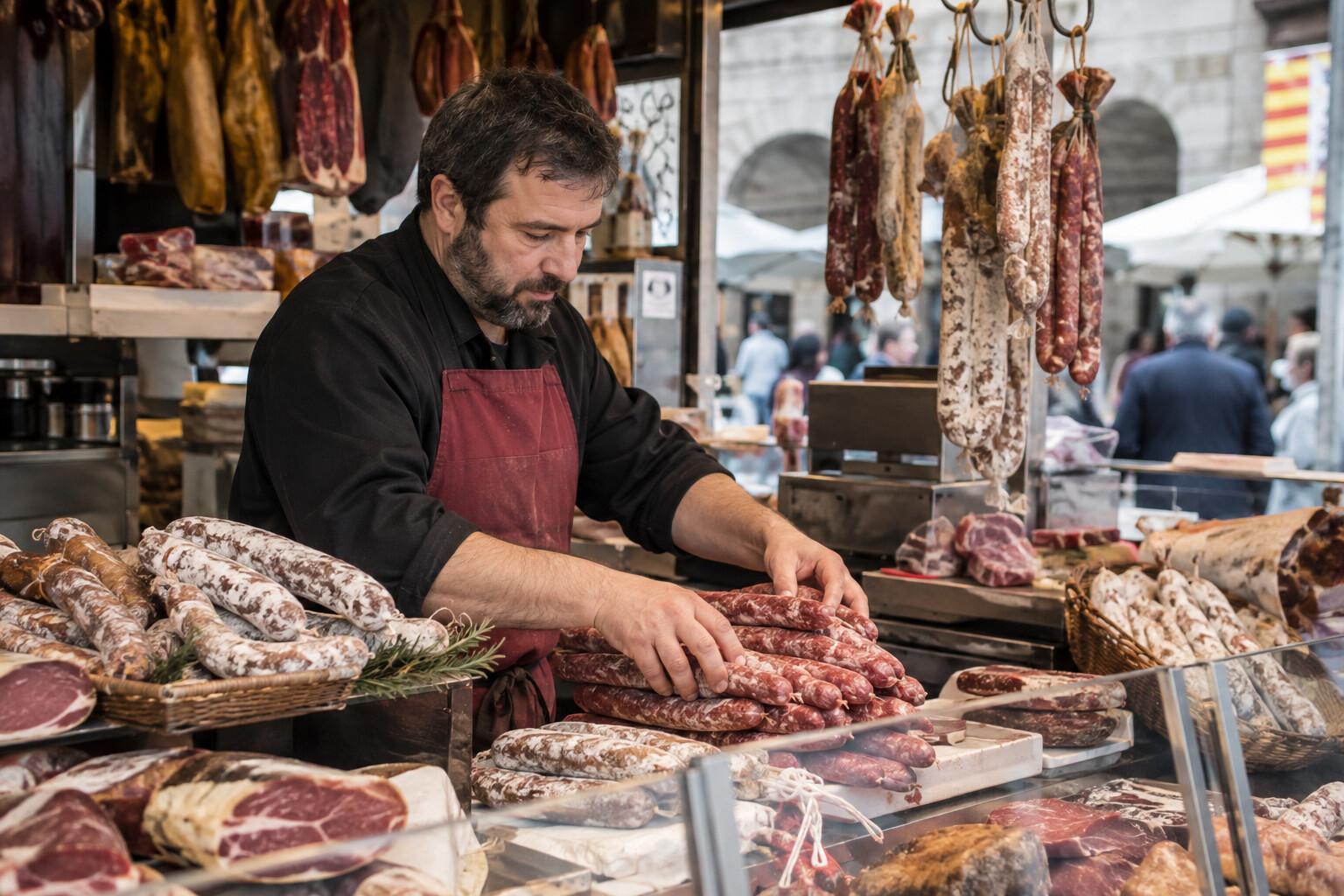
White, black, and egg botifarra belong to another decision
Botifarra blanca is pale and cooked; botifarra negra includes blood and has a darker, richer flavor. Botifarra d'ou, associated especially with Carnival season, includes egg and is often eaten in slices. Recipes and spice vary by producer.
On a mixed cured-meat plate, ask what is house-made or local and how much food the size represents. Four diners may need one plate to taste; two people ordering several starters can quickly build a full meal before the mains appear.
Look for a small-group Catalan food tour that names its market or artisan stops, explains the tasting quantity, and accepts dietary restrictions before payment.
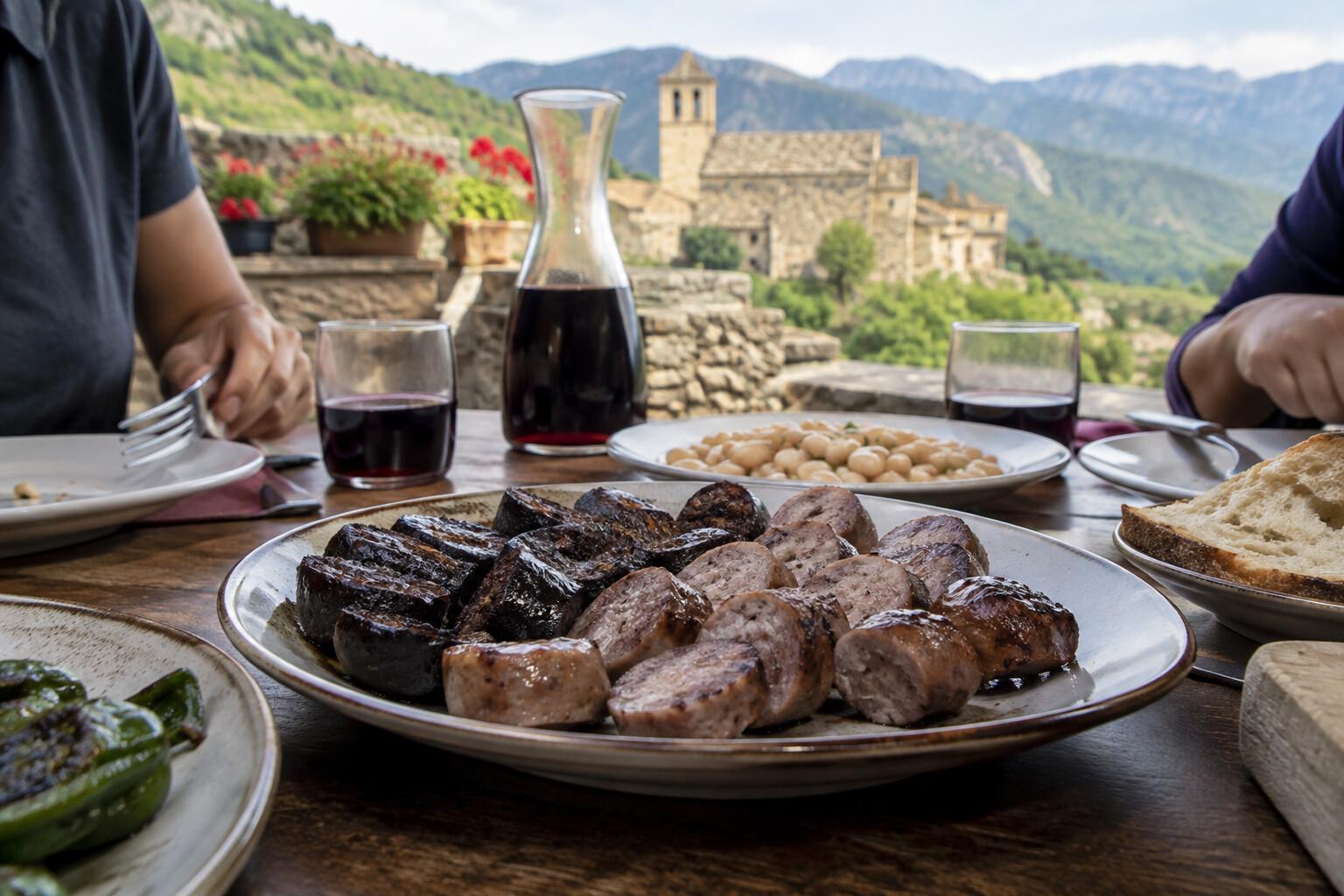
At the butcher, state whether you can cook
Fresh botifarra needs refrigeration and thorough cooking. Tell the butcher how many people you are feeding and whether it is for a grill, pan, or stew. For a picnic or hotel room without a kitchen, buy a cooked slicing variety instead of creating a food-safety problem.
Market prices vary by recipe and producer; use €10–20 per kilogram as a rough starting range for planning, not a posted tariff. Buy a smaller amount from a staffed counter and ask for storage advice. Vacuum packing can help transport, but it does not turn a perishable product into a shelf-stable souvenir.
Travelers taking meat across a border must check the destination country's import rules. A legal purchase in Catalonia is not automatically legal in hand luggage on arrival elsewhere.
Ask the right dietary question
Pork is the default assumption, but ingredients can include blood, egg, dairy, wine, garlic, spices, or fillers depending on the type. Someone avoiding an ingredient needs the recipe or allergen record, not a translation of the product name. Cross-contact is also possible at a shared grill or slicer.
Vegetarian “botifarra” on a modern menu is a separate plant-based preparation and should be described as such. Do not infer suitability from appearance. For religious dietary requirements, ordinary botifarra is not appropriate unless the producer explicitly certifies otherwise.
Match the setting to the version
A rural inn or neighborhood lunch restaurant is the natural place for grilled botifarra with beans. A market counter or traditional delicatessen is better for comparing cooked varieties. Carnival gives egg botifarra a seasonal context; a summer barbecue gives fresh sausage another.
The useful first taste is not a hunt for the rarest filling. Order the grilled plate when hungry, taste sliced varieties when sharing, and let the seller tell you how their version is made. Botifarra becomes understandable as soon as “sausage” stops being treated as one single product.
Related guides
- Beyond La Boqueria: How to Visit Catalan Food Markets Well
Shop La Boqueria and neighbourhood markets as working food halls, with better timing, useful vocabulary and a seasonal picnic plan.
- 10 Traditional Catalan Foods to Try During Your Trip
From pa amb tomàquet and calçots to suquet de peix and crema catalana—ten Catalan dishes and how to find them on your trip.
- Catalan Breakfast: What to Order at a Bakery or Bar
Choose between pastry, pa amb tomàquet, an entrepà or a cooked fork breakfast—and order at the hour each Catalan bar does best.
Are you in the know?
Receive new articles, local updates, and occasional offers from selected partners. We never share your email address. Unsubscribe at any time.
By subscribing you agree to our privacy policy.